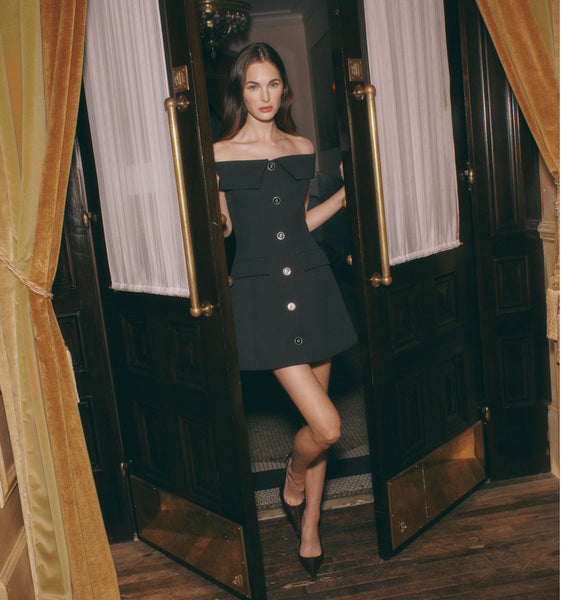
Finally, let's talk about specific combinations that are always a hit
The highest-risk points in production Hem: waviness, uneven turn-up, twisting Waist seam: stretching during sewing, then rolling Zipper area: ripples on light fabrics Lining: peeking out at hem or neckline Sleeve cap: puckering on puff sleeves Inline QC checkpoints I use Cutting check: grainline and panel pairing Sewing check: waist seam strength and stitch density Mid-press check: shine marks and seam impression Hem check: full round measurement and evenness Final check: try-on inspection for movement and coverage A practical risk table for buyers Midi A-Line Dress Many buyers want a dress that sells fast and does not create fit drama
A gown for the ones who love black, love luxury, and love being the moment
Alternatively, the minimalist dresser will love Khaites timeless silk slip, accessorized, perhaps, with some of-the-moment shell jewelry
In the inside, this lace-up dress shoe features soft, smooth cushioned leather and a padded tongue and heel cuff for comfort
Pattern rules I follow for lace A-line I reduce sharp curves where lace can pucker I keep neckline shapes simple unless I add stabilizers I avoid too many small panels that create bulky joins I add a little extra ease if lace has low recovery Motif placement and cutting control I decide if motifs must match at center front and side seams I mark nap or direction if lace has a visible grain look I plan scallop edge usage only when repeat is consistent I estimate extra fabric needs for matching to prevent shortages Grading risks and how I control them Bust increase: lace gaping shows faster, so I add support points Armhole: lace can scratch, so I refine armhole depth by size Waist seam: lace bulk grows with size, so I choose cleaner seams A planning table for cost and consistency What are the most common QC problems in lace A-line dresses, and how do I prevent them